Picking a venue is not just about how pretty it looks in photos. It also has to hold your guests comfortably. Too small, and everyone feels cramped. Too large, and the room feels empty no matter how much decor you add. Getting the size right changes how your whole wedding feels.
|
Why Venue Capacity Matters?
|
A venue's capacity is not just a number on a listing. It affects seating, the dance floor, food service, and even how photos turn out. A room built for 300 guests will feel hollow with only 150 people in it. A room built for 200 will feel chaotic and tight if you squeeze in 350. Capacity also affects your budget. Larger halls usually cost more to rent, decorate, and cater. Choosing the right size means you are not overpaying for space you will never fill, and you are not cramming guests into a room that cannot hold them.
|
Start With Your Real Guest List
|
Before wedding venue selection for a perfect wedding, get a realistic guest count. Not a rough guess. An actual list. Sit down with both families and write out names. Weddings in Pakistan often carry long guest lists because of extended family, so this step matters even more here than elsewhere. Once you have a number, add a small buffer of 10 to 15 percent for late additions or people who confirm last minute. This final number is what you search with. Everything else, from hall size to catering quantities, is based on it.
|
Small, Medium & Large: What the Numbers Mean
|
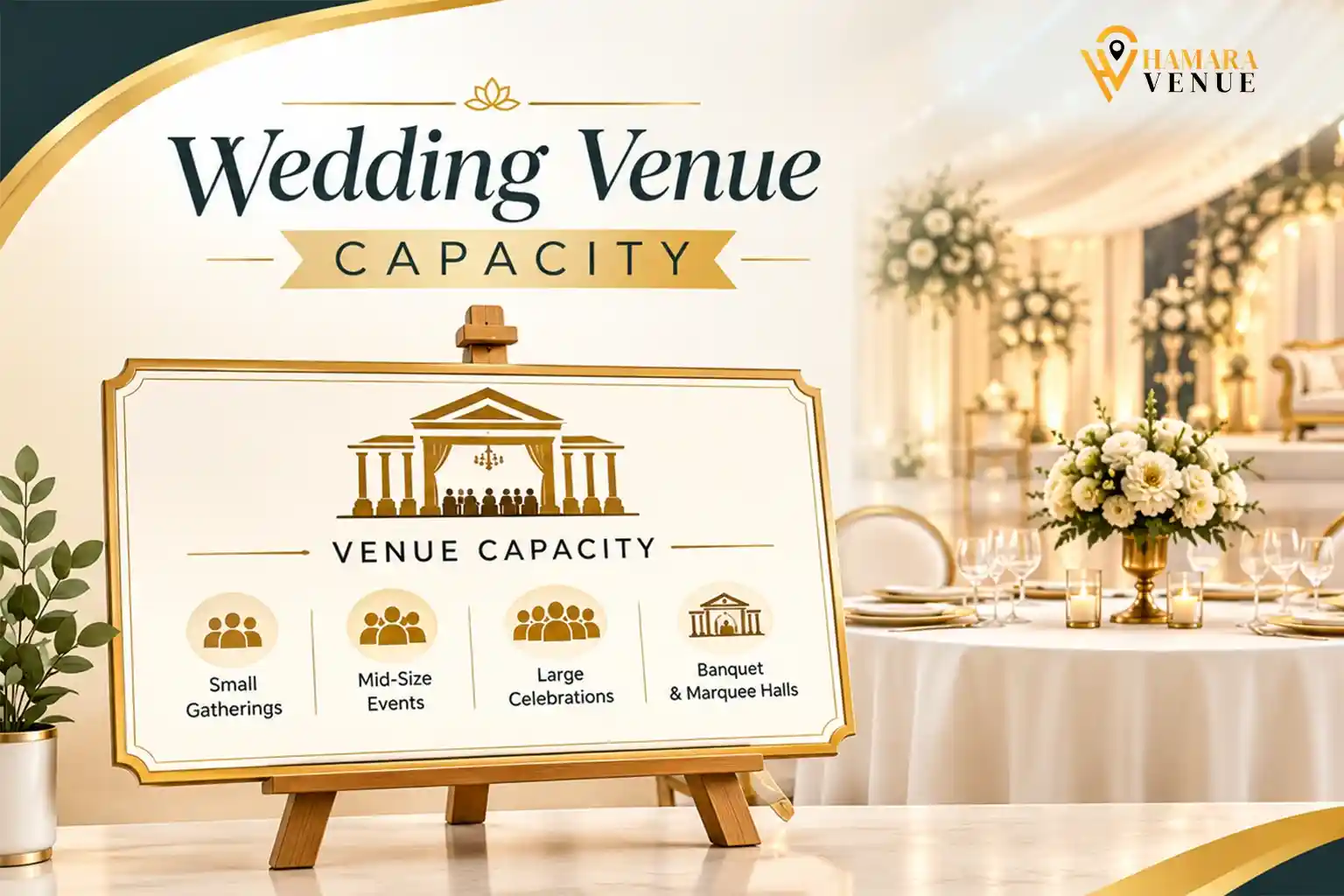
Guest counts are usually grouped into rough categories. These are not fixed rules, but they help when comparing venues. - Small weddings (up to 150 guests): These work well in intimate halls, banquet rooms, or smaller marquees. A smaller crowd is easier to manage, keeps the setup more personal, and often costs less overall.
- Medium weddings (150 to 400 guests): This is the most common range for Pakistani weddings. Most marquees and marriage halls are built around this size. You get enough space for a proper stage, dance floor, and dining area without paying for excess capacity.
- Large weddings (400 guests and above): These need bigger marquees, banquet complexes, or outdoor farmhouses. Large weddings also need more parking, more catering staff, and a layout that can handle guest flow without bottlenecks near entrances or food counters.
|
How to Search by Capacity on Hamara Venue?
|
One of the easiest ways to filter venues by size is through Hamara Venue. The platform lets you sort listings by capacity, from low to high or high to low, so you are not stuck opening dozens of individual pages just to check if a hall fits your guest count. You can also filter by venue type, whether you want a marquee, an indoor hall, or an outdoor farmhouse setup, and choose between per-event or per-head pricing depending on how you want to budget. This makes it much easier to shortlist wedding venues in cities like Lahore, Karachi, Islamabad, or Rawalpindi that actually match your numbers instead of scrolling through venues that are either too small or wildly oversized.
|
Common Mistakes Couples Make With Capacity
|
- Booking too big "just in case." Extra space sounds safe, but it usually backfires. A half-empty hall photographs poorly and costs more than it needs to.
- Ignoring the difference between seated and standing capacity. A hall might list a capacity of 500, but that number can shift depending on whether it is a formal sit-down dinner or a buffet-style event with lounge seating. Always confirm which capacity figure you are looking at.
- Forgetting the stage and dance floor eat into space. Capacity numbers often assume a basic layout. Once you add a large stage, a dance floor, a DJ setup, or extra decor structures, usable seating space shrinks. Ask the venue how capacity changes once your specific setup is included.
- Not accounting for vendor space. Catering staff, photographers, and decor teams all need a working room. A venue that is technically "full capacity" with guests alone may feel overcrowded once vendors are factored in.
|
Questions to Ask the Venue About Capacity?
|
Before signing anything, get clear answers to these: - What is the maximum seated capacity versus standing capacity?
- Does the quoted number include stage and dance floor space?
- Is there a separate area for children or elderly guests to sit comfortably?
- How does capacity change between indoor and outdoor sections, if both are available?
- What is the parking capacity, and is it enough for your guest count?
These details matter as much as the headline capacity number. A hall that fits 400 people but has parking for only 100 cars is going to cause problems on the day.
|
Matching Capacity to Your Wedding Style
|
Capacity is not only about fitting bodies into a room. It also shapes the mood, a formal sit-down dinner needs more space per guest than a buffet or standing reception. If you want a proper dance floor, a live band, or a large stage setup, factor that into your capacity math early. A venue that "just barely" fits your guest count with no room for these extras will feel tight on the day. If your wedding includes multiple events, like a mehndi, baraat, and walima, capacity needs can shift between each one. Some couples book different hall sizes for different events based on which one draws the biggest crowd. Others choose one flexible venue with adjustable sections that can expand or shrink for each function.
|
Choosing the right venue size is about balance. Big enough to keep guests comfortable. Small enough to keep the room feeling warm and full. Start with an honest guest count, understand the difference between seated and standing capacity, and always ask how stage or dance floor space affects the final numbers. Using a platform like Hamara Venue to filter by capacity from the start saves time and helps you avoid touring venues that were never going to fit your guest list in the first place. Once size is sorted, the rest of your venue decisions, from decor to catering, become a lot easier to plan around.
|
Frequently Asked Questions
|
Q. How do I calculate the right venue capacity for my wedding?
|
Count your confirmed guest list, add a 10 to 15 percent buffer, then match that number to the venue's seated capacity.
|
Q. What is the difference between seated and standing capacity?
|
Seated capacity accounts for tables and chairs, so it is usually lower than standing or buffet-style capacity for the same room.
|
Q. Is it better to book a slightly bigger venue than needed?
|
No. An oversized venue for your guest count often looks empty and costs more than necessary.
|
Q. Can I filter wedding venues by capacity on Hamara Venue?
|
Yes. Hamara Venue lets you sort listings by capacity, low to high or high to low, to match venues to your guest count.
|
|