You are just thinking of fixing the wedding date! Now the questions start piling up fast. Where should you get married? Who should cater it? and the big one, when should you actually book the venue? Here's the honest answer. Book earlier than you think you need to. The venue is the first domino. Once it falls into place, every other decision gets easier.
|
Why Does the Venue Come First?
|
Your venue shapes almost everything else. It decides your date, your guest capacity, your overall style, and even which vendors are free to work with you. Photographers, caterers, decorators and DJs all want a confirmed date and location before they lock in. Wait too long at the venue, and you end up planning blind. You cannot book a photographer for "sometime next spring." You need a date and you cannot get a date without a venue that says yes. There is also a money angle. Popular dates cost more. If you wait, you are left choosing from whatever is still open, and that usually means paying premium prices for a date nobody else wanted, or settling for a space that does not really fit your vision.
|
What is the ideal Booking Window?
|
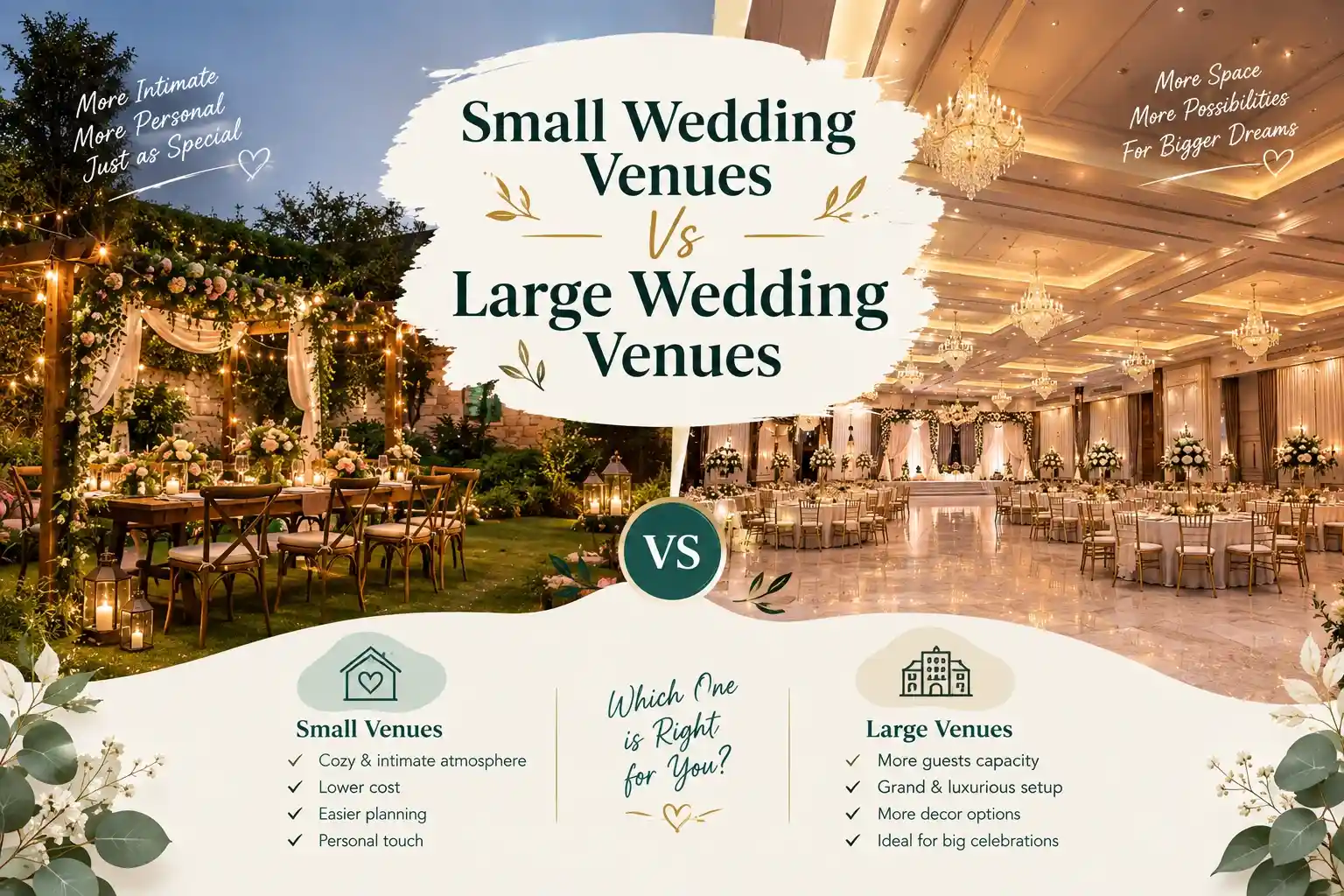
Most wedding planners agree on a similar range. Start touring venues 9 to 12 months before your wedding. If you want a Saturday evening in peak season, aim for 12 to 18 months out. Here is why the season matters so much. Spring and fall are the busiest wedding months almost everywhere. Saturdays go first, Fridays and Sundays follow. Winter and weekday weddings usually have more breathing room. If your date is flexible, you have an advantage. A Friday night or a Sunday afternoon wedding often comes with better pricing and easier availability, even at popular venues. Guest count matters too. Bigger weddings need bigger spaces, and there are simply fewer large venues to choose from. If your guest list is over 200, start looking early. If your wedding is small and intimate, you have a bit more room to breathe, but the good venues still fill up.
|
What to Have Ready Before You Start?
|
You do not need every detail nailed down before you select a wedding venue. But a few basics make the process much smoother. - A rough guest count
- A general budget
- A preferred date or a short list of dates
- A sense of your style, whether that is a garden setting, a ballroom, or something more relaxed
Walking into a tour with these answers ready helps the venue team give you accurate pricing and honest availability right away. Guessing on the spot only slows everything down.
|
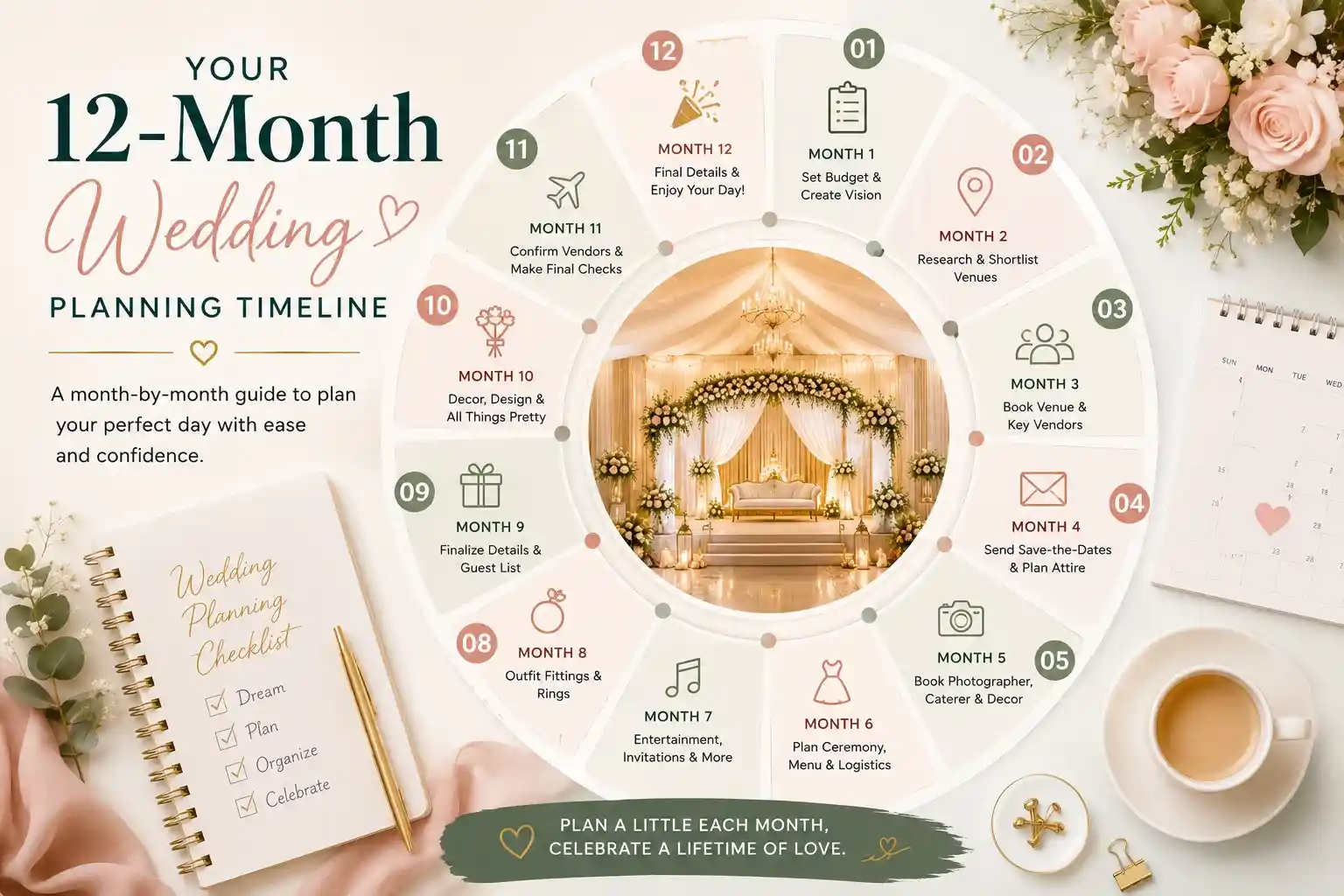
Wedding Planning Timeline
| Time Before Wedding |
What to Do |
| 12 to 18 months |
Set your budget, build a rough guest list, start researching venues |
| 9 to 12 months |
Tour your shortlist, compare pricing and packages, book your favorite |
| 6 to 8 months |
Sign the contract, pay the deposit, start booking other vendors |
| 3 to 4 months |
Confirm layout, menu, and any final venue details |
| 1 to 2 months |
Do a final walk-through and lock in the day-of timeline |
|
This is a general guide, not a strict rule. Some couples book in six months and have a beautiful wedding. Others plan two years ahead because their dream venue is booked solid every summer weekend. Use the timeline as a starting point, then adjust based on your own date and priorities.
|
When It Makes Sense to Wait
|
Sometimes rushing into a venue contract is the wrong move. If your guest count is still a mystery, or your budget is not settled, or your families have not agreed on a location, slow down first. That said, waiting should still be productive. Use the extra time to narrow your numbers and figure out what matters most to you. Once your basics are clear, move quickly. Good venues do not sit open for long.
|
Finding the Right Fit, Not Just Any Venue
|
Timing is only half the story. The venue itself has to actually work for your wedding. This is where couples often struggle, especially when searching across dozens of scattered listings and vague social media posts. This is exactly the gap Hamara Venue fills. Instead of chasing down individual venue websites and guessing about pricing, couples can browse verified options in one place, compare details side by side, and shortlist venues that actually match their guest count and budget. That alone can shave weeks off the search process. Ask a few key questions before signing anything. - What is included in the rental?
- Is catering in-house or outside vendors only?
- What is the backup plan for outdoor ceremonies?
- How many hours do you actually get the space for?
- Small details like these can make a big difference on the actual day.
|
What Can Make Your Venue Search Easier?
|
Touring venues one by one, city by city, is exhausting. It eats weekends and stretches the timeline longer than it needs to be. Online wedding planning platforms like Hamara Venue simplify that process by putting real venue details, pricing ranges, and photos in front of couples early, so the shortlist is smaller and smarter before a single tour is booked. The goal is not just booking a venue fast. It is booking the right one, with enough time left to enjoy the planning instead of stressing through it.
|
Start your venue search 6 to 7 months before your wedding date. Push that closer to 8 months if you want a peak-season Saturday. Have your guest count, budget, and style preferences ready before you start touring. Booking early is not about rushing. It is about giving yourself room to compare, ask the right questions, and choose a space you will actually love looking back on. Once the venue is set, everything else starts falling into place.
|
Frequently Asked Questions
|
Q. How far in advance should I book my wedding venue?
|
Generally 6, 7 months. For peak season Saturdays, aim for 8,9 months.
|
Q. Is it possible to book a venue in less than 6 months?
|
Yes, especially with flexible dates, off-peak seasons, or weekday weddings.
|
Q. What information do i need before touring venues?
|
A rough guest count, your budget, and a preferred date or date range.
|
Q. Do weekday weddings really get better venue availability?
|
Yes. Fridays, Sundays, and weekdays are far less competitive than Saturdays.
|
|