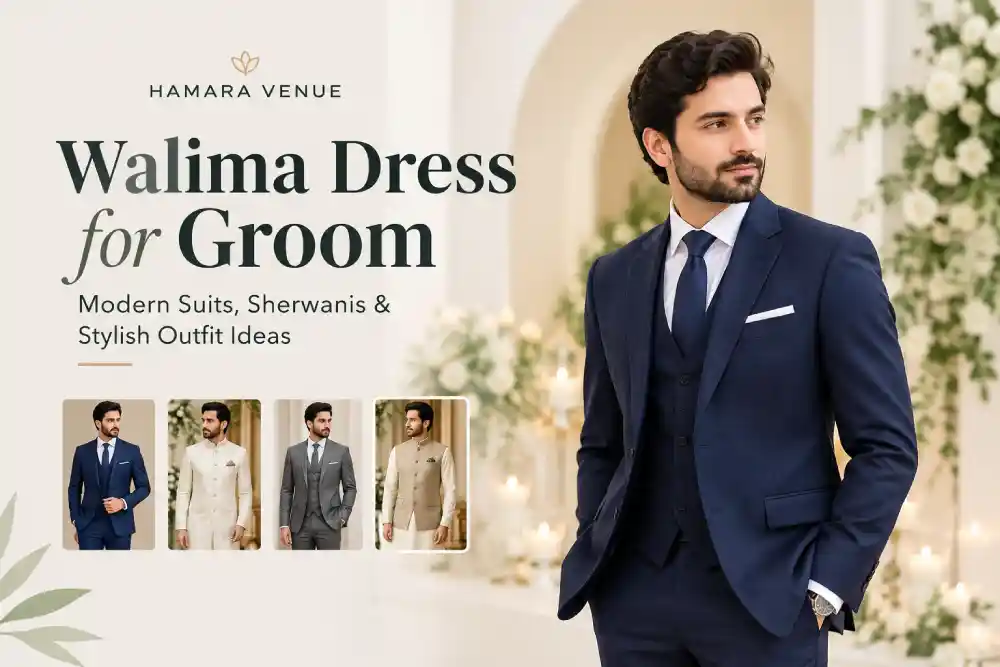
Three weeks before his barat, Bilal stood in front of a mirror in a Lahore tailor’s shop, wearing a borrowed black suit that made him look like he was heading to a job interview.
|
“Beta,” said Ustad Rafiq, a measuring tape draped around his neck, “you are not attending a meeting. You are the prince of your own wedding. You need a prince coat for the groom.”
|
Bilal had seen a groom prince coat at his cousin’s weddings, and it always stole the room. He had just never understood why. So Ustad Rafiq pulled a sample from the rack and began to explain.
|
The Design That Makes a Groom Look Royal
|
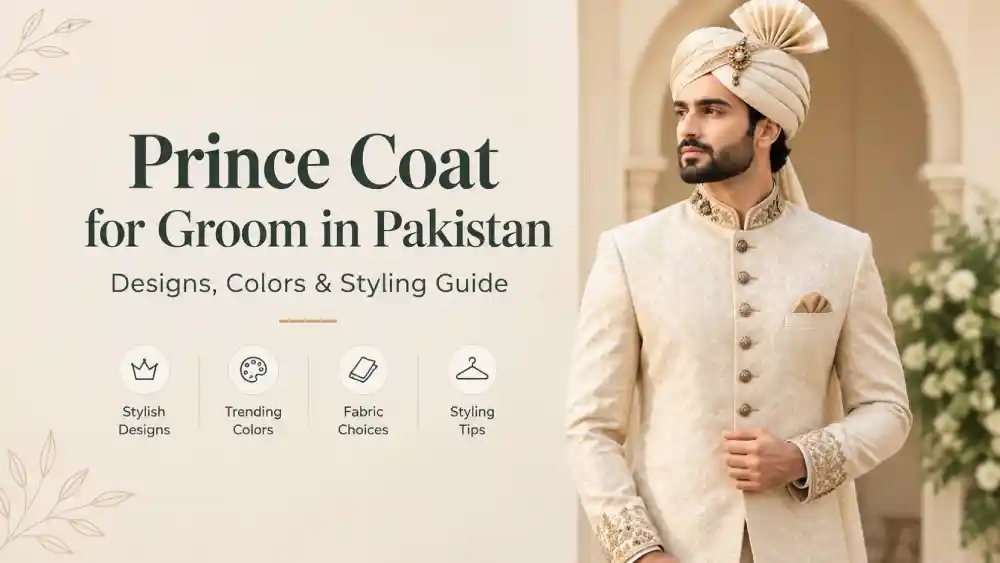
“A prince coat is a fitted, knee-length coat with a stand collar and a neat line of buttons down the front,” rather than a sherwani and far sharper than a suit.” That balance, he explained, is why the wedding prince coat has become one of the most requested groom wedding outfits in Pakistan.
|
He laid out three prince coat designs on the table. The first was the classic: a clean front, a structured shoulder, and subtle tone-on-tone piping. It suits grooms who like quiet confidence.
|
The second was the embroidered prince coat, with zardozi or dabka work on the collar, cuffs, and front pansaid. “It is lightel. “The bride’s dress carries the heavy work,” Ustad Rafiq said. “Your embroidery should be refined, never louder than hers.”
|
The third was the modern prince coat, with a slightly asymmetrical front, contrast lining, and fabric-covered buttons. “Younger grooms ask for this one when they want something fresh but still traditional.”
|
Colors That Photograph Beautifully
|
Bilal’s eyes drifted to a rack of deep greens, wine reds, and creamy ivories.
|
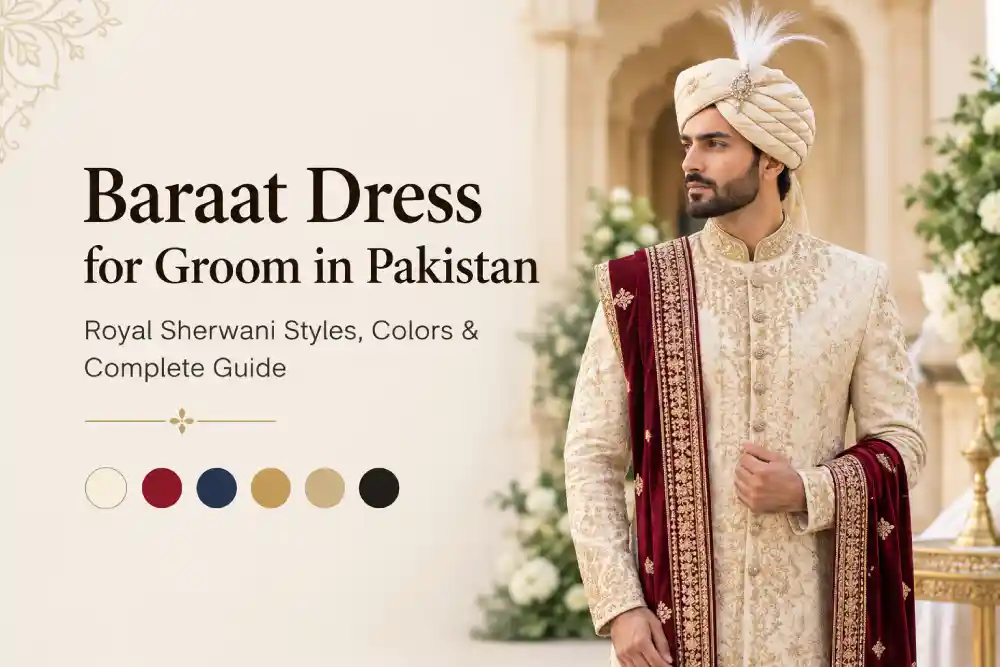
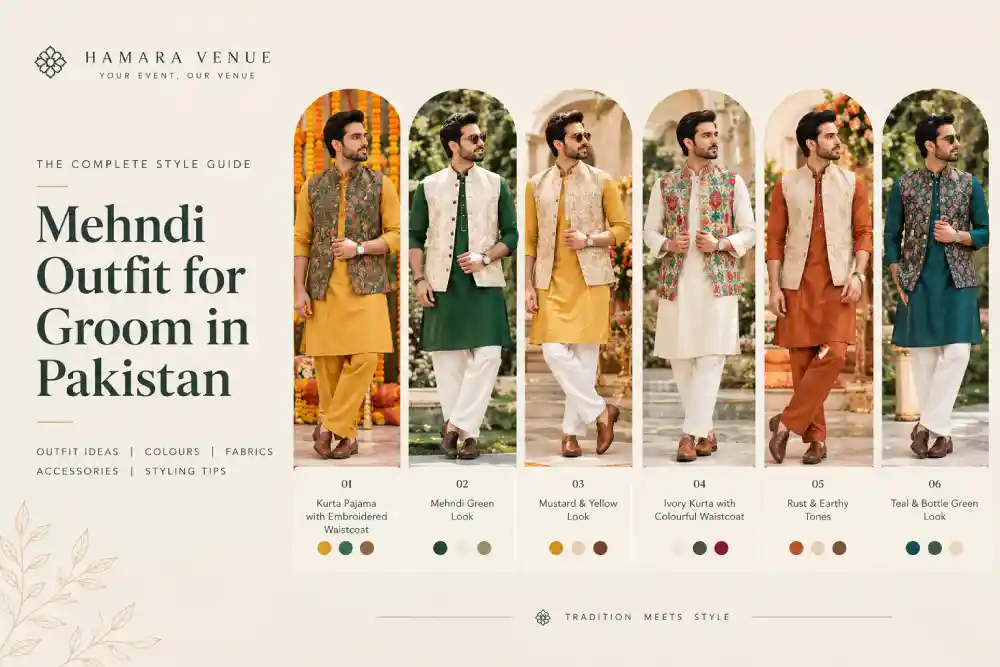
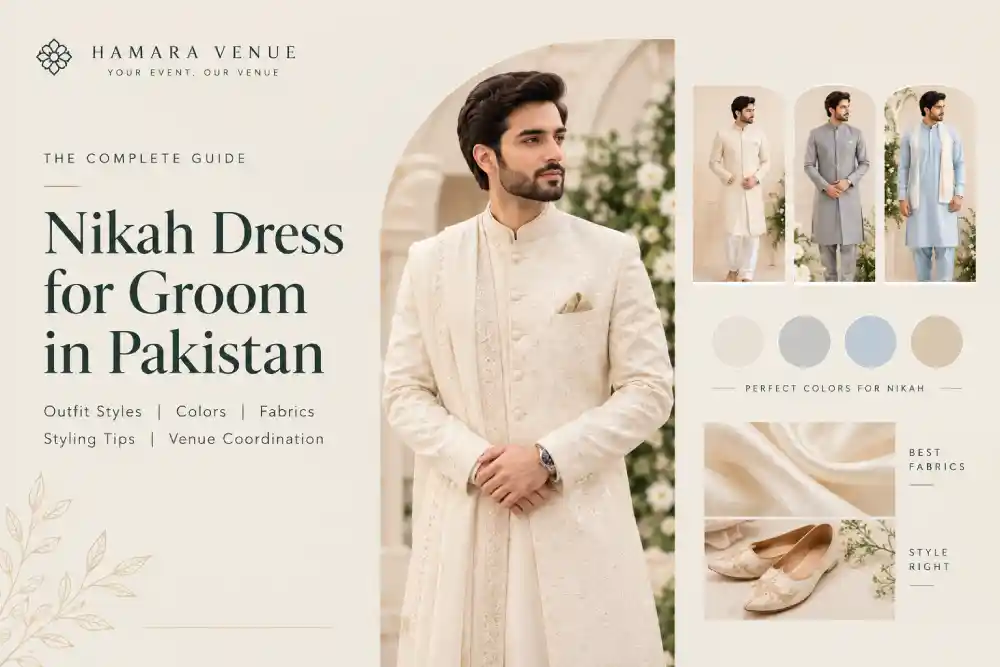
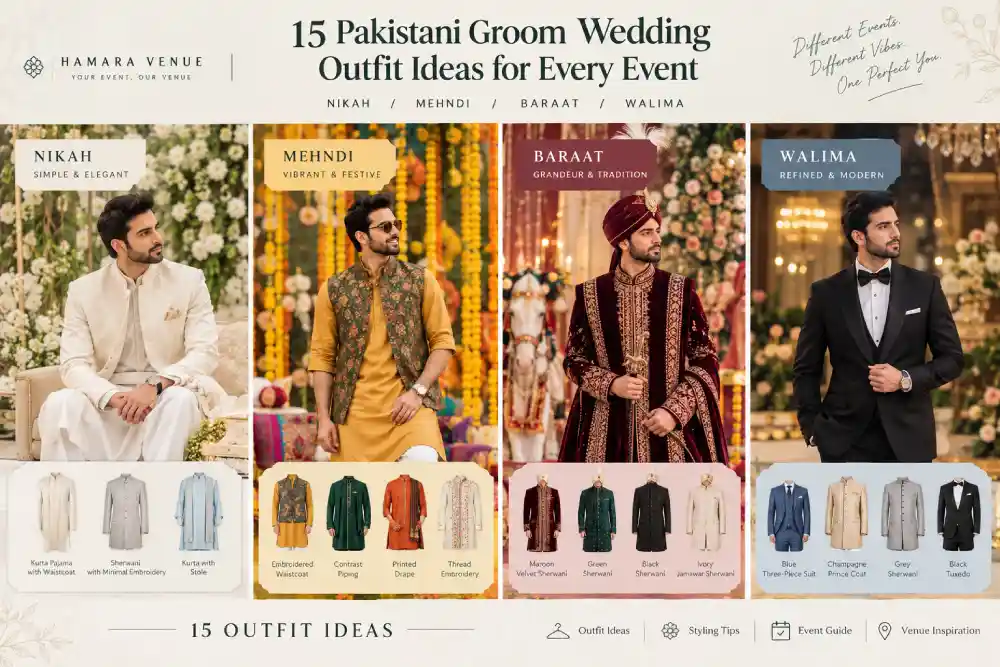
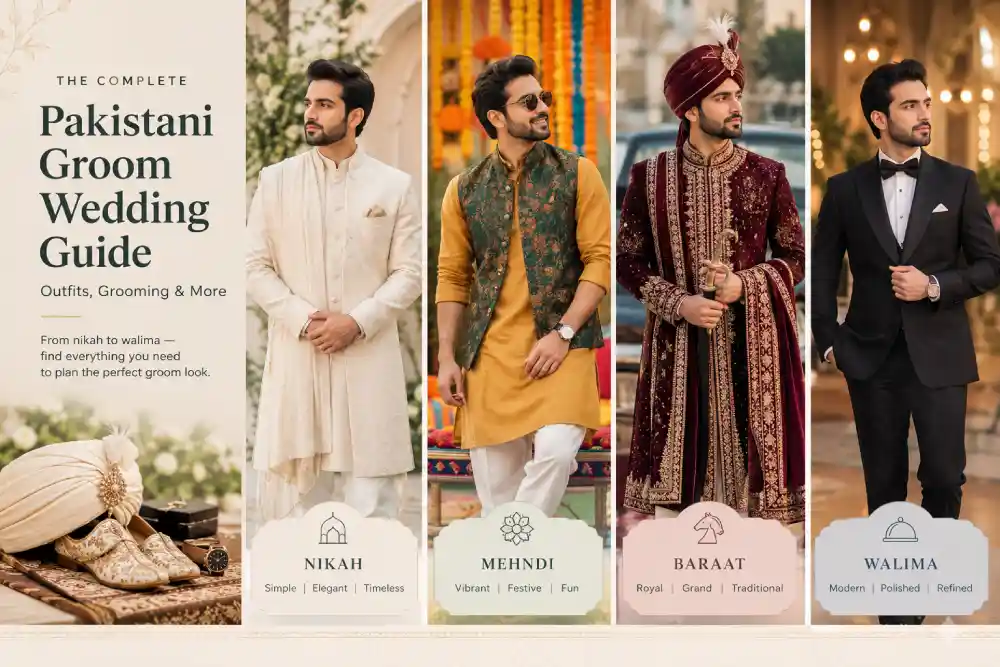
“Black never fails,” said Ustad Rafiq. “But look at what is trending now.” Emerald green, midnight navy, and wine are the favorites among prince coat colors for evening barat ceremonies. Ivory, champagne, sand, and soft mint work best for daytime nikah and walima events.
|
Then he gave the tip Bilal would repeat to everyone afterward: “Ask what the bride is wearing. If she wears maroon, you wear ivory, champagne, or black. Compliment her, never copy her.” Matching the bride and groom color combination is what makes wedding photos look balanced. Bilal’s fiancee had chosen a rich maroon, so he settled on a warm ivory-champagne coat with antique-gold detailing.
|
Fabrics: Choose for the Season, Not Just the Look
|
“Prince coat fabric decides how you feel at eleven at night, after hours of photos,” Ustad Rafiq said, running his hand over each cloth.
|
- Velvet: rich and regal, perfect for winter wedding outfits, but heavy in warm weather.
- Jamawar: woven with built-in texture, so it looks luxurious without much embroidery.
- Raw silk: a soft natural sheen, ideal for spring and autumn.
- Wool blends and fine suiting: breathable, crisp, and comfortable for long events.
- Tissue and organza: light and elegant for summer wedding ceremonies.
|
Bilal’s wedding fell in November, so he chose a silk-blend jamawar that was warm but not heavy.
|
When the tailor started pinning the fabric, Ustad Rafiq grew serious. “The most expensive coat looks cheap if the fit is wrong.”
|
The shoulder seam should sit exactly at the edge of your shoulder. Sleeves should end at the wrist bone. The coat length should fall somewhere between mid-thigh and the knee, depending on your height. “Taller grooms can go longer,” he said. “Shorter grooms look better a little above the knee, so the legs look longer.” A good custom-tailored prince coat will always beat a ready-made one.
|
On the final fitting day, Ustad Rafiq brought the finishing touches for groom styling.
|
- Bottoms: matching or contrasting churidar, or slim straight trousers for a modern look.
- Headwear: a tall kulla with a wrapped pagri and a turra (tail), or a simple turban in a contrasting color.
- Stole: a light shawl in maroon, cream, or gold, draped over one shoulder.
- Footwear: embroidered khussas or polished peshawari chappals in a matching tone.
- Accessories: a brooch on the pagri, a classic watch, and nothing more. “Let the coat speak,” he said.
- Grooming: a fresh haircut and a trimmed beard two days before the event, not the morning of.
|
The Walk-In With Prince Coat
|
On the night of the barat, Bilal stepped out of the car in his ivory-champagne coat, the gold kulla catching the lights. The room went quiet, and then the cameras started clicking.
|
He thought of the job-interview suit and smiled.
|
Choosing a prince coat for a groom is not about following a trend. It is about picking a design, color, and fabric that fit you, your bride, and your season. Get those right and you will not just attend your wedding. You will own it.
|
1. How much does a prince coat for a groom cost?
|
Prices vary widely with fabric, embroidery, and tailor. A plain suiting coat costs far less than a hand-embroidered jamawar or velvet one, so set your budget first and choose the fabric to match.
|
2. How early should I order a prince coat?
|
Order 4 to 6 weeks before the wedding. That leaves time for two fittings and any alterations, especially for embroidered coats.
|
3. Can I wear a prince coat again after the wedding?
|
Yes. Plain or lightly embroidered coats in black, navy, or ivory work well at other family weddings and formal events. Heavily embroidered pieces are harder to rewear.
|
4. How do I clean and store a prince coat?
|
Dry clean only, and avoid washing it at home. Store it on a padded hanger in a breathable garment bag, away from damp and direct sunlight.
|
|