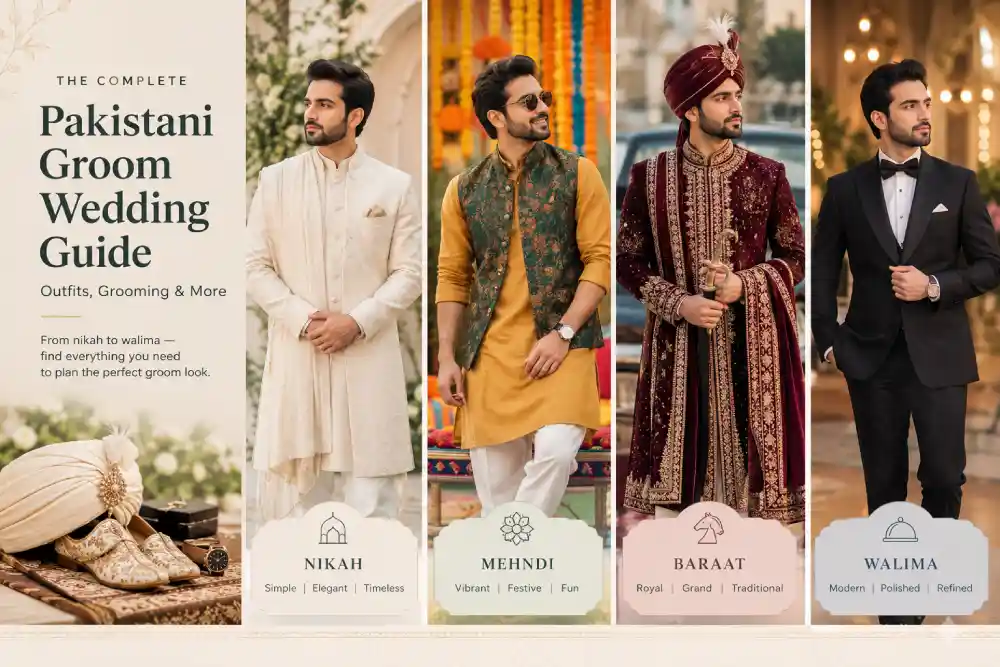
Every Pakistani wedding has four distinct moods: the calm of nikah, the energy of mehndi, the grandeur of baraat, and the polish of walima. A groom's outfit should shift with each one, not repeat the same look four times. Yet many grooms still default to picking a single sherwani style and wearing a version of it across every event, missing the chance to actually match the mood of each day and each set of photographs.
|
15 Trending Wedding Outfit Ideas for Every Event?
|
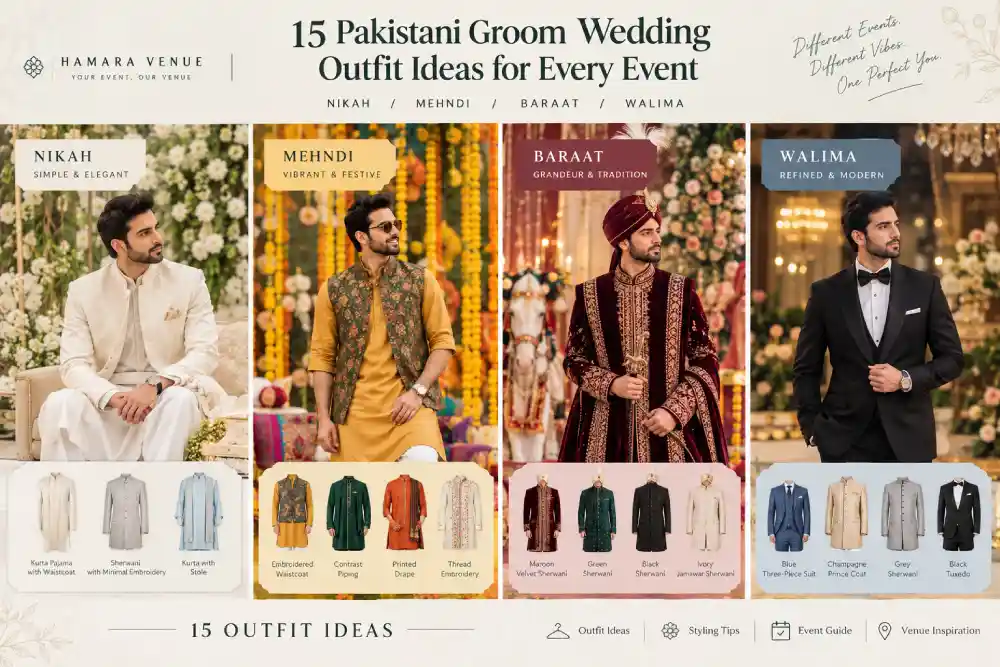
If you're not sure where to start, here are 15 trending outfit ideas, organized by event, to help you build a wardrobe that actually fits the day.
|
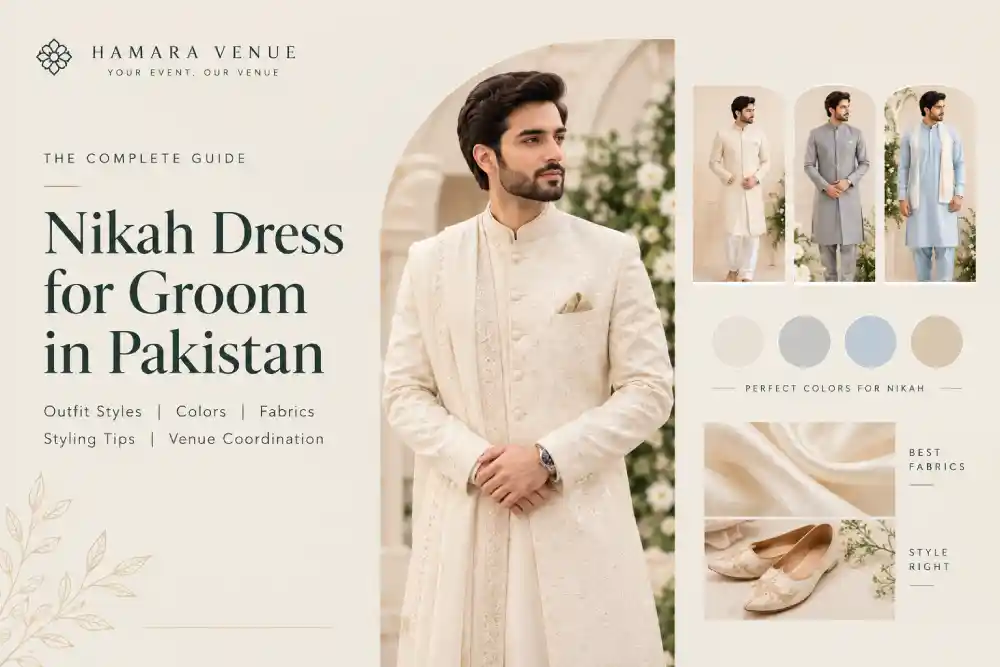
Nikah calls for simple, composed styling. This is often a shorter, more intimate ceremony, so heavy fabric and dense embroidery tend to feel out of place. These three looks strike that balance well.
|
- Ivory kurta pajama with a light waistcoat — Clean, formal, and easy to move in for a shorter ceremony.
- Soft grey sherwani with minimal embroidery — A subtle, modern take that photographs beautifully in daylight.
- Pastel blue kurta with a matching stole — A gentle pop of color without overshadowing the bride's nikah look.
|
For a deeper look at nikah-specific colors and styling, see our full guide: Nikah Dress for Groom in Pakistan.
|
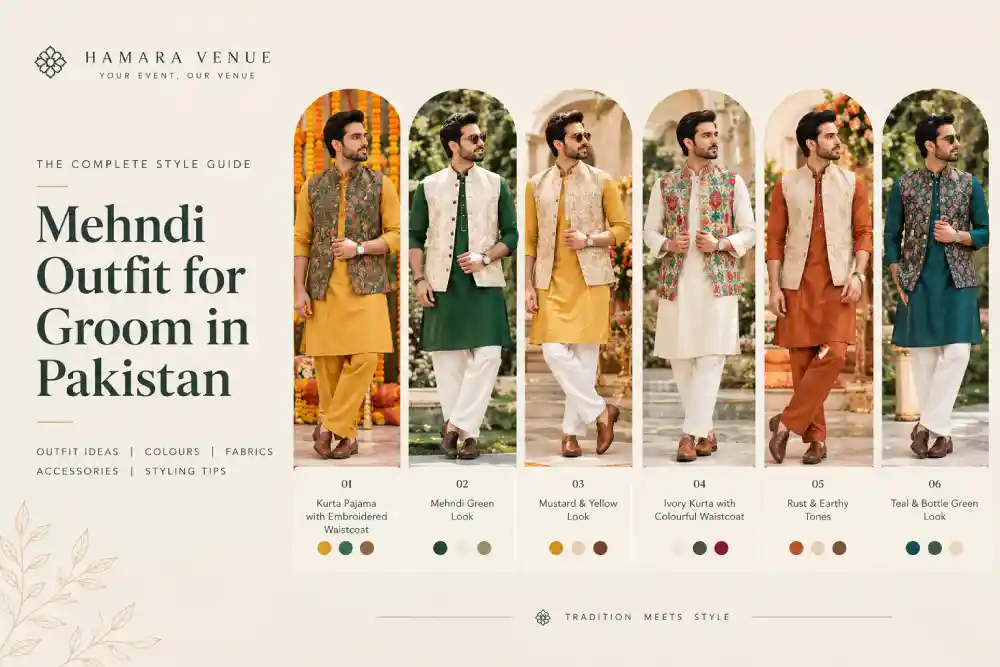
Mehndi is the one event built for bold color and comfortable movement, since it usually involves dance performances and a longer, more relaxed schedule than the other events.
|
- Mustard yellow kurta shalwar with an embroidered waistcoat A current favorite that pairs well with most mehndi themes.
- Bottle green kurta with contrast piping Festive without being overdone, and easy to dance in.
- Rust orange short kurta with a printed dupatta drape A modern, textured option that stands out in group photos.
- Off-white kurta with colorful thread embroidery A lighter base that still feels celebratory.
|
For specific color pairings and traditional-meets-modern looks, see our full guide: Mehndi Outfit Ideas for Groom.
|
Baraat is the centerpiece look of the wedding, and these ideas reflect where sherwani styling is heading right now.
|
- Maroon velvet sherwani with gold zardozi detailing A timeless choice that remains the most requested baraat color in Pakistan.
- Emerald green sherwani with a structured collar A rich, photogenic option that works well against most venue backdrops.
- Black sherwani with tonal embroidery A modern, minimal alternative for grooms who want a sharper, editorial look.
- Ivory jamawar sherwani with a contrast pagri A softer, regal option that photographs beautifully in both daylight and evening lighting.
|
For deeper guidance on choosing your baraat look, see our full guide on Baraat Dress for Groom in Pakistan, which covers colors, fabrics, and fit in more detail.
|
Walima usually calls for a shift toward something more refined and modern, after the heavier, more traditional baraat look.
|
- Powder blue three-piece suit A clean, Western-leaning choice for grooms who want a lighter look after baraat.
- Champagne prince coat with matching trousers A structured, elevated silhouette that suits evening receptions well.
- Soft grey sherwani with subtle brocade detailing A middle ground between traditional and modern styling.
- Classic black tuxedo with a bow tie A bold departure from tradition, increasingly popular at modern walima events.
|
How to Choose Between These Looks?
|
With 15 options across four events, the real challenge is narrowing things down. A few practical questions help:
|
- What season is your wedding in? Lighter fabrics suit summer events, while velvet and jamawar work better in cooler months.
- What's your venue's overall color palette? A sherwani that clashes with the stage backdrop stands out for the wrong reasons.
- How much are you coordinating with the bride? Matching tones, not identical outfits, usually looks best in photos.
- What's your comfort level with bold color versus classic tones? Mehndi is the easiest place to experiment.
|
Styling Tips That Apply Across All Four Events
|
No matter which outfits you choose, a few habits make every look come together better on the day itself.
|
- Get every outfit tailored at least two to three weeks before the wedding, not the week of
- Try your full look together — outfit, shoes, and accessories — before the actual event
- Keep event-specific accessories, like a pagri or kulla, planned alongside the outfit itself
- Break in new shoes ahead of time so they're comfortable for a full day of standing and walking
|
Where Venue Fits Into Outfit Planning
|
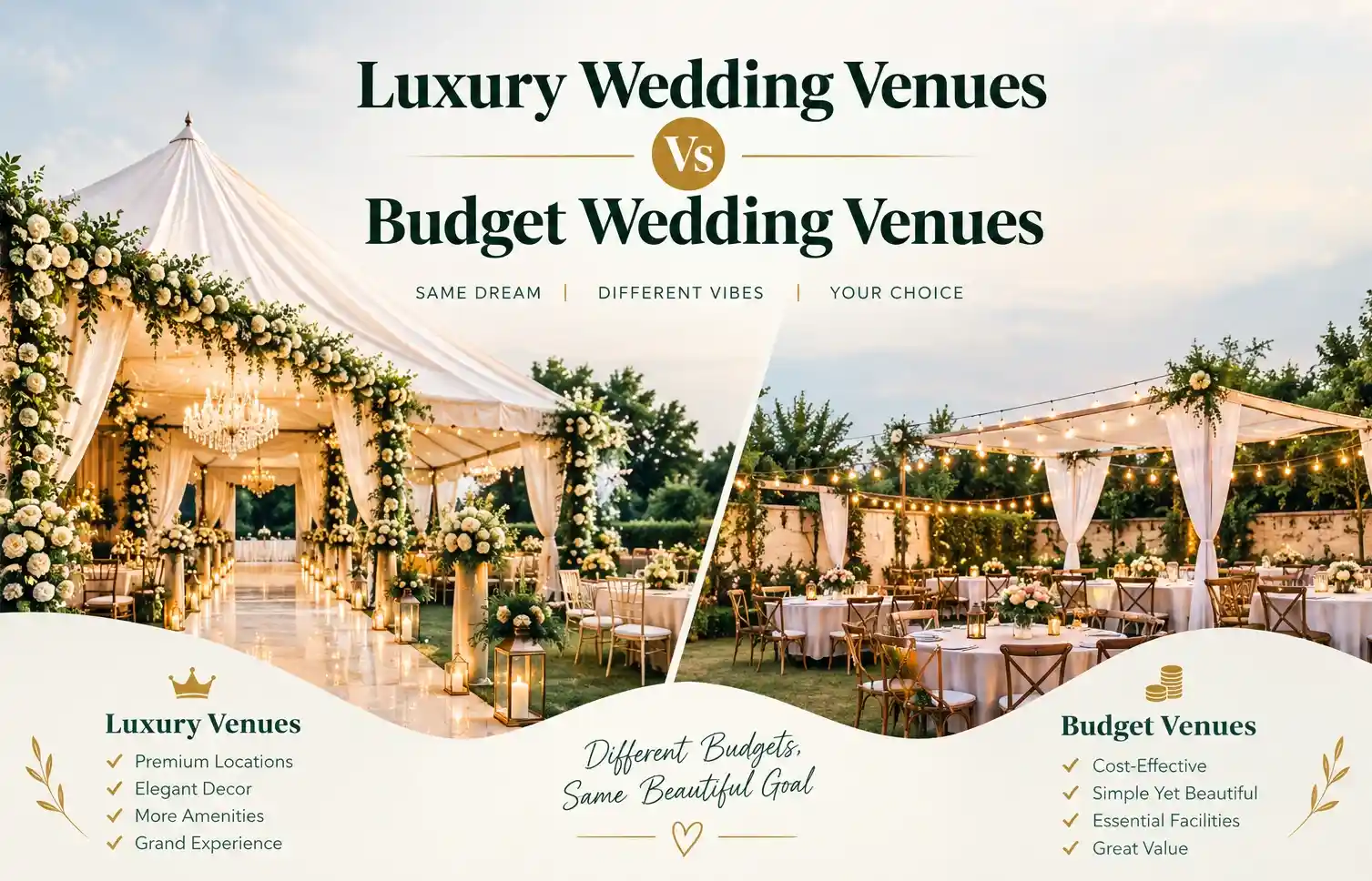
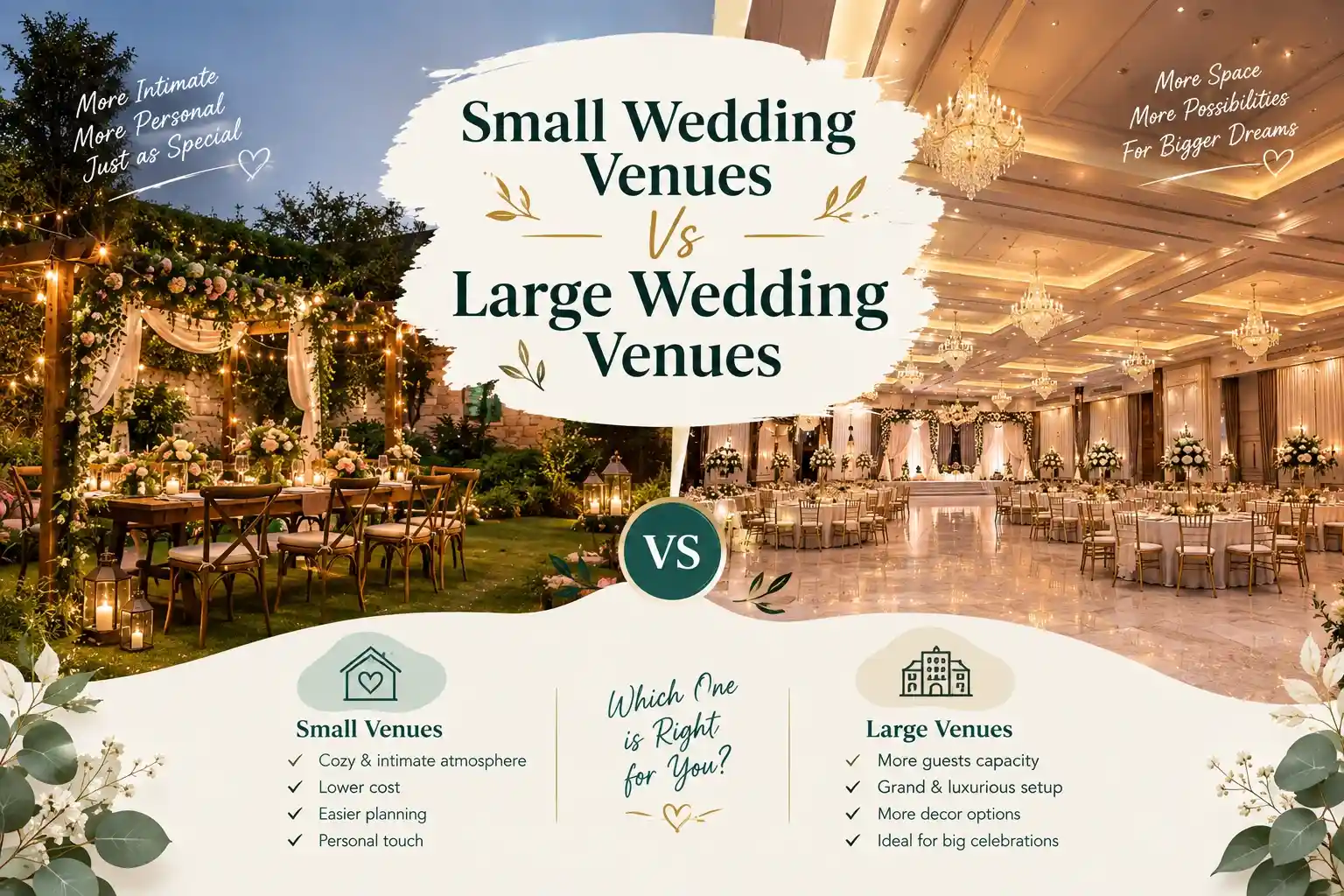
It's easy to think of outfits and venues as separate decisions, but they influence each other more than most grooms expect. A rich maroon sherwani looks very different against a garden lawn than it does inside a chandelier-lit banquet hall. Before finalizing your baraat or walima color, it's worth browsing your shortlisted venues on Hamara Venue so you know the lighting and backdrop you're actually working with, rather than guessing based on photos taken in a different setting altogether.
|
A Pakistani wedding isn't one outfit repeated four times, it's four distinct looks, each suited to the mood of its event. Use nikah for simplicity, mehndi for color, baraat for grandeur, and walima for polish, and build each outfit with that specific event in mind.
|
Once you've settled on a direction for each look, the rest of your wedding wardrobe planning becomes far easier to manage, and the final result feels intentional rather than repetitive across your wedding photos and albums.
|
|