Pakistani weddings have always centered the bride. Magazines, blogs, and Instagram pages are full of bridal lehengas, mehndi looks, and jewelry guides. The groom, more often than not, gets a single line: "match the bride's colors." Search "Pakistani wedding outfit ideas" and you'll find hundreds of bridal results before a single dedicated groom guide shows up.
|
That's changing, and for good reason. A Pakistani wedding today spans four to five separate events, and the groom needs a distinct, well-thought-out look for each one nikah, mehndi, baraat, and walima all call for different outfits, different colors, and sometimes a completely different mood. On top of outfits, there's grooming, accessories, footwear, and a growing list of small decisions that quietly add up.
|
This guide pulls everything together in one place: what to wear at each event, how to choose your sherwani, what grooming looks like in the weeks before your wedding, and a full checklist so nothing gets missed. Think of this as your starting point each section below links to a deeper guide if you want to go further into that specific topic, whether that's fabric selection, sherwani pricing, or planning a groom shower.
|
The Groom's Wedding Wardrobe
|
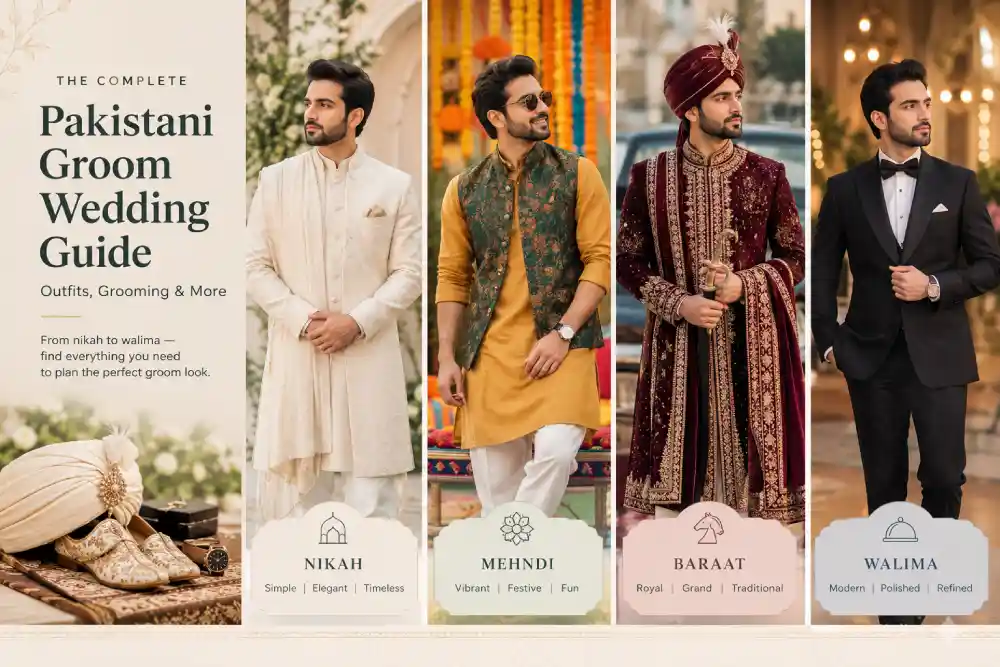
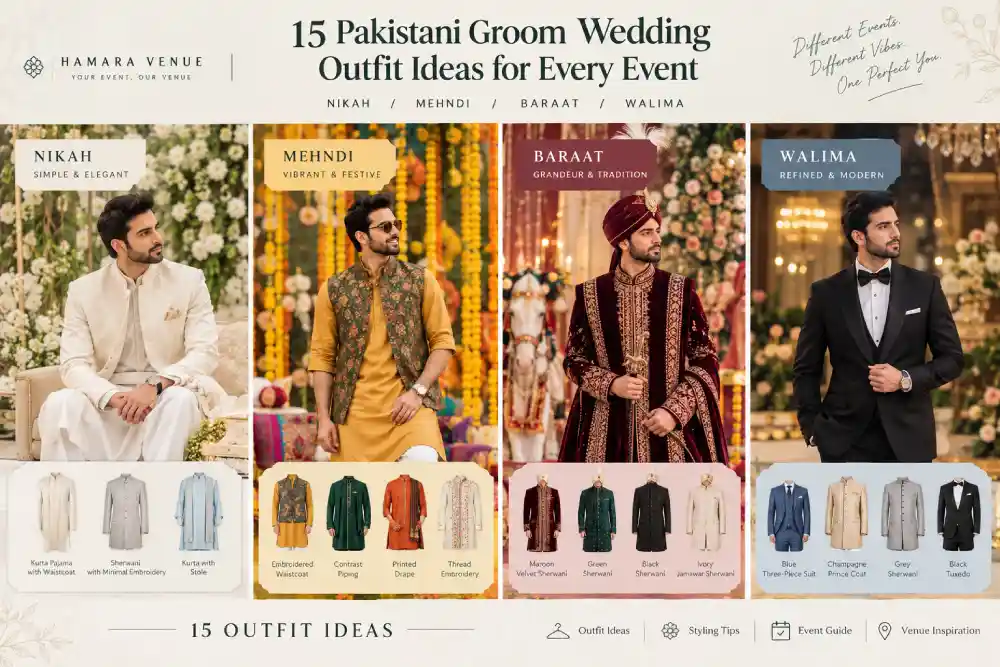
Before diving into each event, it helps to see the full picture. A typical Pakistani groom needs outfits for four key functions, and each one has its own unwritten dress code.
|
- Nikah — Traditionally simpler and more formal, often in lighter or neutral tones
- Mehndi — Bright, festive colors, lighter fabric, room to move and dance
- Baraat — The most elaborate look of the wedding, usually a heavily detailed sherwani
- Walima — Polished and modern, often a suit or a lighter sherwani
|
Most grooms don't realize how much planning this actually takes until invitations are already out. Booking your tailor or designer months in advance saves you from a rushed, stressful decision closer to the date. Beyond the outfits themselves, each event also brings its own accessories: a pagri or kulla for baraat, a simpler waistcoat for mehndi, matching footwear for each function and those details are just as easy to leave until the last minute.
|
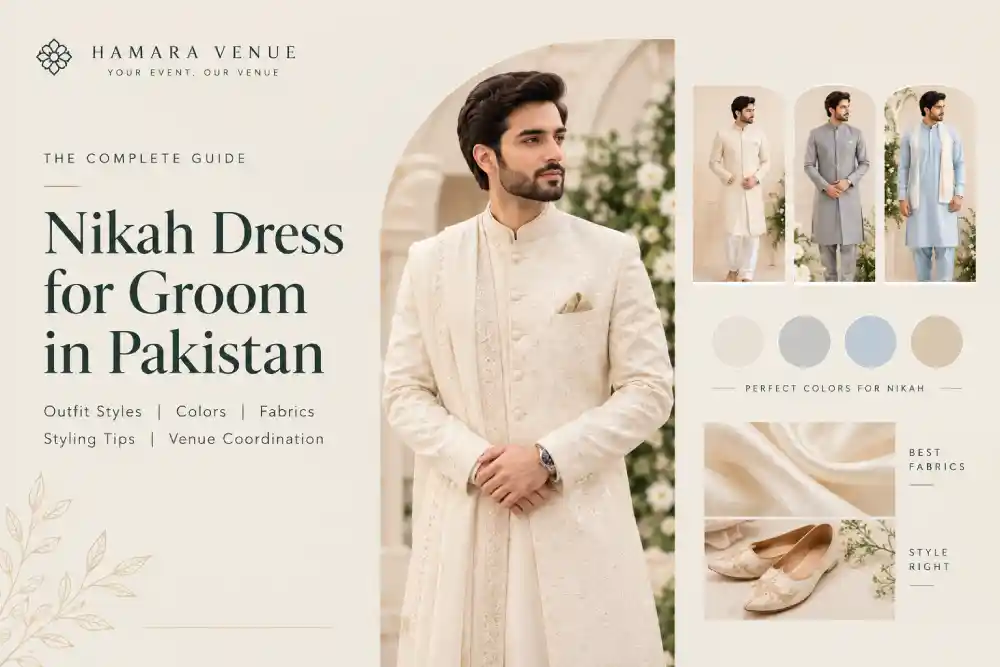
The nikah ceremony is usually more intimate and religious in tone, which is reflected in what grooms wear. Simpler cuts, calmer colors, and fewer embellishments tend to work best here this isn't the moment for your boldest outfit.
|
Ivory, soft grey, pastel blue, and muted gold are common choices. Many grooms opt for a simple sherwani or a well-tailored kurta pajama with a light waistcoat. The goal is elegance without excess you want to look composed and put-together, not like you're wearing your baraat outfit a day early.
|
Fabric choice matters too. Since nikah ceremonies are often shorter and can happen during the day, breathable fabrics like cotton-silk blends or lighter linen work better than heavy velvet. Accessories should stay minimal as well — a simple stole or a single statement accessory is usually enough, rather than layering on the same jewelry or embellishments planned for baraat.
|
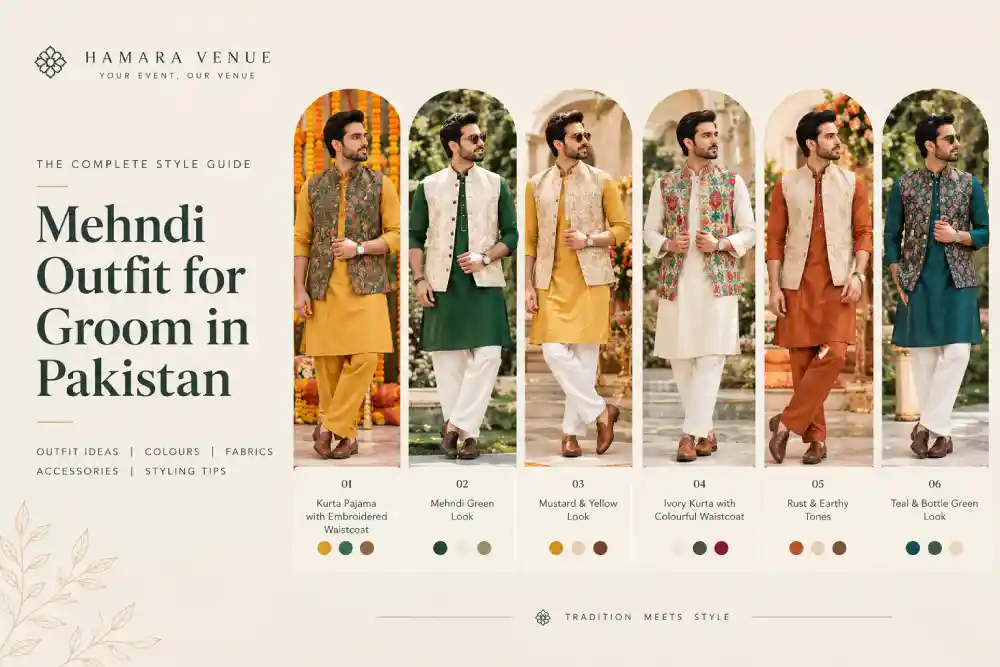
Mehndi is the one event where grooms can genuinely have fun with color. This is a high-energy, dance-filled celebration, and the outfit should match that mood.
|
- Mustard yellow, bottle green, and rust orange are current favorites
- Kurta shalwar with a printed or embroidered waistcoat is a popular combination
- Lighter, breathable fabrics matter here more than any other event, since dancing is involved
- Matching (not identical) tones with the bride's mehndi outfit is a common styling choice
|
Comfort should guide every decision at this event. A stiff, heavily embellished outfit might photograph beautifully in the first hour and become unbearable by the third. Many grooms now choose a slightly shorter kurta length for mehndi specifically, since it moves more easily during dance performances than a longer, baraat-style silhouette.
|
If there's one outfit a groom will spend the most time and money on, it's the baraat sherwani. This is the centerpiece look of the entire wedding heavily embroidered, rich in fabric, and often paired with a turban, sehra, or kulla.
|
Deep maroon, royal blue, emerald green, and classic gold remain timeless baraat choices, though black and charcoal sherwanis have grown significantly in popularity for a more contemporary, editorial look. Detailing usually includes zardozi, tilla, or resham embroidery along the collar, cuffs, and front placket.
|
Fit matters as much as fabric here. A baraat sherwani should be tailored close to the body through the shoulders and chest, with enough room in the sherwani's length to move comfortably during photos and the baraat procession itself. Most grooms also pair their baraat sherwani with a pagri, kulla, or sehra, which adds another layer of color and styling decisions on top of the sherwani itself it's worth planning these together rather than as separate purchases.
|
Walima calls for a shift in tone. After the elaborate baraat look, most grooms move toward something more refined and modern: a well-cut suit, a lighter sherwani, or a prince coat.
|
Pastel and muted tones powder blue, soft grey, champagne, and blush are popular walima choices, especially for evening events held indoors. Fabric-wise, this is where lighter jamawar, subtle brocade, or a clean three-piece suit often replaces the heavier baraat fabric.
|
Many grooms treat walima as a chance to show a more "modern groom" side after a traditionally-dressed baraat. It's less about grandeur and more about sharp, clean tailoring. Since walima is often held indoors under warmer lighting, lighter and cooler tones tend to photograph better here than the deep, saturated shades chosen for baraat.
|
Sherwani Designs: What's Trending Right Now
|
Sherwani design in Pakistan has moved noticeably in the past few years. Where heavy, all-over embroidery once dominated, many grooms now prefer focused detailing, a heavily embroidered collar and front placket, with a plainer body fabric.
|
Structured shoulders, slightly shorter hemlines, and Nehru-collar cuts are especially popular for baraat looks right now, while jamawar and raw silk fabrics remain a strong choice for a more traditional feel. Digital-printed sherwanis, once considered a shortcut, have also improved significantly in quality and are now a legitimate, more affordable alternative to hand embroidery. Layered sherwanis, a lighter inner coat paired with an open outer jacket have also started appearing more frequently at higher-end weddings, offering a more dimensional silhouette than a single-piece design.
|
How to Choosing the Right Sherwani Color?
|
Color is often the hardest decision in the entire outfit-planning process, mostly because grooms are trying to coordinate with the bride, the venue, and the season all at once.
|
- Maroon and deep red remain the most requested baraat colors in Pakistan
- Emerald and bottle green photograph beautifully against both indoor and outdoor venues
- Black and charcoal sherwanis suit grooms who want a modern, minimal look
- Gold and champagne tones work well for evening walima events under warm lighting
|
A simple rule that helps most grooms: pick your color based on the venue's dominant tones first, then coordinate with the bride's outfit second. A sherwani that clashes with the stage backdrop stands out in photos for the wrong reasons. Lighting also plays a bigger role than most grooms expect a color that looks rich under natural daylight can shift noticeably under a venue's warm indoor lighting, so it's worth checking fabric swatches under both if possible.
|
Prince Coat: The Modern Alternative
|
The prince coat has become one of the fastest-growing categories in Pakistani groom fashion. It sits between a full sherwani and a Western suit — a structured, knee-length coat, usually paired with matching trousers, that photographs sharply without the weight or heat of a heavily embellished sherwani.
|
Prince coats work particularly well for walkier and smaller receptions, where a groom wants a formal, elevated look without repeating the baraat's traditional silhouette. Velvet and jamawar prince coats remain popular for evening events, while lighter linen-blend versions are gaining traction for daytime functions. Because the silhouette is more fitted than a traditional sherwani, tailoring precision matters even more — a prince coat that's even slightly loose through the shoulders loses much of its sharp, structured appeal.
|
Choosing the Right Sherwani Fabric
|
Fabric choice affects everything from how the sherwani drapes to how comfortable it is to wear for eight hours straight.
|
- Silk — A classic, versatile option that photographs beautifully under most lighting
- Jamawar — Heavier, richly patterned, ideal for baraat and colder-weather weddings
- Velvet — Deep, luxurious texture, best suited for evening events and winter weddings
- Raw silk and linen blends — Lighter and breathable, better for daytime or summer functions
|
Weather and event timing should influence fabric choice as much as appearance does. A heavy velvet sherwani at a midday summer baraat can turn an exciting day into an uncomfortable one. It's also worth asking your tailor how each fabric holds embroidery heavier fabrics like velvet and jamawar tend to support dense zardozi work better than lighter silk or linen blends, which can pull or pucker under too much heavy detailing.
|
How Much Does a Groom's Sherwani Cost?
|
Sherwani pricing in Pakistan varies enormously depending on fabric, embroidery, and whether it's tailored or rented.
|
| Category |
Typical Price Range |
| Rental Sherwani |
Budget-friendly, one-time use |
| Ready-to-Wear Sherwani |
Mid-range, moderate embroidery |
| Custom-Tailored Sherwani |
Higher cost, made-to-measure |
| Designer/Luxury Sherwani |
Premium fabric and hand embroidery |
|
Rental remains a popular choice for grooms who want a heavily embellished look without the full custom price tag, especially for a one-day event like the baraat. Custom tailoring, on the other hand, gives a guaranteed fit and is often reused for other formal events later, which can make the higher upfront cost easier to justify over time. Beyond the sherwani itself, it's worth budgeting separately for alterations, matching accessories, and any last-minute fitting adjustments, since these smaller costs add up quickly and are easy to underestimate.
|
Prince Coat vs Sherwani vs Suit
|
With three strong options on the table, many grooms get stuck choosing between a sherwani, a prince coat, or a Western suit.
|
- Choose a sherwani if you want a traditional, heavily detailed look for baraat
- Choose a prince coat if you want a modern, structured silhouette for walima or smaller events
- Choose a suit if your walima leans Western or your venue has a more contemporary theme
|
There's no single right answer; it depends on the event, the venue's theme, and your personal style. Many grooms actually use all three across their four wedding events, rather than picking just one. A sherwani for baraat, a prince coat for walima, and a well-tailored suit for a smaller reception or a post-wedding dinner is a fairly common combination that keeps each event visually distinct.
|
Sehra: Traditional and Modern Styles
|
The sehra — the veil of flowers or beads worn over the groom's face during baraat — remains one of the most recognizable parts of Pakistani wedding tradition. While its use has declined slightly in some urban weddings, it's still a strong cultural element, especially in Punjab and rural areas.
|
Traditional sehras use fresh flowers like jasmine or rose, while modern versions increasingly use pearls, crystals, or fabric strands for a cleaner, more photogenic look that doesn't wilt under event lighting. Some families still treat the sehra as a meaningful ritual element rather than a styling choice, so it's worth checking family expectations early, before assuming a modern alternative will be acceptable.
|
Dressing the Groom's Brother
|
The groom's brother often plays a visible role across every wedding event, and his outfit needs to complement the groom's without competing with it.
|
A common approach is coordinating fabric or color family for example, a lighter shade of the groom's baraat color, or a simpler cut of the same silhouette. This keeps the wedding party looking cohesive in photos without anyone accidentally outshining the groom. Younger brothers often lean toward simpler kurta shalwar combinations, while an older brother closer in age to the groom might wear a lighter version of the same sherwani style for a more coordinated group photo.
|
A well-tied pagri or turban adds significant height and presence to a baraat look, and the color pairing with the sherwani matters as much as the sherwani itself.
|
- Gold and maroon pagris remain the most traditional pairing for red or maroon sherwanis
- Ivory and pastel turbans work well with lighter, modern sherwani colors
- Contrast pagris — a bold color against a neutral sherwani — have grown in popularity for a more statement look
- Turban style (Rajasthani, Sindhi, or Punjabi draping) is often chosen based on family tradition or region
|
Getting the pagri professionally tied on the wedding day, rather than pre-set, tends to hold its shape better through a long baraat procession. It's also worth factoring in the person tying it into your wedding-day timeline; a rushed, last-minute tying job rarely holds up as well as one done with enough time to adjust and secure it properly.
|
Footwear is easy to overlook, but it's one of the most photographed details of a groom's outfit, especially during the baraat entrance and stage shots.
|
Khussa remains the most traditional choice, especially in embroidered gold or maroon to match the sherwani. Peshawari chappal offers a simpler, more understated option for mehndi or daytime events, while loafers or formal leather shoes are increasingly common for walima, especially when paired with a prince coat or suit. Comfort matters just as much as style here — a groom is often on his feet for hours, and breaking in new shoes even a week before the wedding can prevent blisters during the baraat itself. (Our guide, Best Wedding Shoes for Pakistani Grooms, compares all three options in more depth.)
|
Kulla: The Traditional Wedding Cap
|
The kulla — a traditional cone-shaped cap worn during baraat — remains a distinctive part of groom styling in many parts of Pakistan, particularly Punjab. It's usually worn wrapped with a pagri rather than alone, adding structure and height to the overall look.
|
Modern kulla designs now come in a range of embroidery styles and fabric bases, allowing grooms to match them precisely to their sherwani's color and detailing rather than settling for a generic option. Since the kulla sits close to the face in most photos, its color and embroidery density deserve just as much attention as the pagri wrapped around it.
|
Groom showers have become an increasingly popular pre-wedding event in Pakistan, mirroring the bridal shower tradition but centered around the groom and his closest friends and family.
|
These events are usually smaller and more relaxed than the main wedding functions, which makes venue choice especially important — you want a space that feels intimate rather than empty. Platforms like Hamara Venue let you filter smaller halls and lounges by guest capacity, so you can find a space sized correctly for a groom shower instead of overpaying for a venue built for a full wedding reception. Theming, food, and games at a groom shower also tend to be more casual and personalized than the formal wedding events, giving the groom's closest circle a chance to celebrate in a way that feels distinct from the bigger functions.
|
Grooming: Haircuts and Hairstyles
|
Outfit planning tends to get all the attention, but grooming matters just as much on the actual wedding day. Hairstyle is one of the simplest ways to elevate a groom's overall look, and it's worth deciding well before the wedding week, not the night before.
|
Textured crops, classic side-parts, and slightly longer styles paired with a well-defined beard are currently the most requested looks among Pakistani grooms. A trial appointment with your barber a few weeks before the wedding helps avoid any last-minute surprises with a new cut or color. This trial run matters more than most grooms expect — a hairstyle that looks great in photos online doesn't always suit every face shape or hair texture, and it's far better to discover that a month out than the night before the baraat. (Our detailed guide, Best Groom Haircuts & Wedding Hairstyles for Pakistani Men, covers specific styles suited to different face shapes.)
|
Beard Styles for the Big Day
|
Beard grooming deserves its own planning timeline, separate from your regular routine. A beard that looks great day-to-day might need shaping, trimming, or a slightly different style to photograph well under event lighting and up close in wedding photography.
|
Clean, well-defined beard lines and a slightly fuller, groomed look tend to photograph better than an overly trimmed or patchy style. Starting beard grooming visits a few weeks in advance, rather than the day before, gives your beard time to settle into its final shape.
|
- Schedule your final trim two to three days before the wedding, not the same day
- Keep beard oil and a small comb in your wedding-day kit for quick touch-ups
- Discuss your beard shape with your barber alongside your hairstyle, not separately
- Avoid trying a completely new beard style within a week of the wedding
|
The Complete Pre-Wedding Checklist
|
With so many outfits, appointments, and small details to track, a written checklist is the easiest way to avoid last-minute panic. Here's a starting point every groom should build on:
|
- Finalize outfits for nikah, mehndi, baraat, and walima at least two to three months out
- Book your tailor or rental early, especially during peak wedding season
- Schedule haircut and beard grooming trials four to six weeks before the wedding
- Confirm pagri, kulla, or sehra bookings alongside your sherwani, not separately
- Break in new wedding shoes ahead of time to avoid discomfort on the day
- Pack a wedding-day emergency kit — safety pins, extra buttons, and touch-up grooming tools
- Confirm timing and logistics with your photographer for each event
- Reconfirm every vendor booking one week before the wedding
|
Checking these off gradually, rather than all at once in the final weeks, keeps wedding planning manageable instead of overwhelming. A simple habit — reviewing the list once a week and marking off what's done — keeps momentum going without needing to think about the whole wedding at once.
|
Budgeting for the Groom's Side
|
Outfit costs are only part of the picture. A realistic groom's budget also needs to account for salon visits, accessories, shoes, and a few costs that often catch people off guard — like tailoring alterations or last-minute rental deposits.
|
Building a simple category-by-category budget early on prevents overspending in one area and running short in another closer to the wedding. It also helps to compare vendor and venue pricing early using a platform like Hamara Venue, since a clear picture of venue costs makes it much easier to see how much room is genuinely left for outfits, grooming, and accessories.
|
Getting the Right Wedding Photos
|
All the planning around outfits and grooming ultimately comes together in photographs, so it's worth thinking about poses and shots in advance rather than improvising on the day.
|
Solo portraits, couple shots with the bride, wide baraat entrance shots, and candid family moments each require slightly different posing and timing. Discussing a rough shot list with your photographer beforehand — rather than leaving everything to the moment usually results in a more complete, well-rounded photo album. It also helps to flag any specific family members or group combinations you want photographed, since photographers can't always guess who matters most in a crowd of relatives.
|
A Pakistani groom's wedding wardrobe isn't one outfit — it's a coordinated series of decisions made across nikah, mehndi, baraat, and walima, each with its own color palette, fabric, and mood. Add grooming, accessories, and a realistic budget into the mix, and it becomes clear why groom planning deserves the same attention bridal planning usually gets.
|
Start early, build your checklist gradually, and treat each event as its own styling decision rather than one outfit repeated four times. Small details — a well-tied pagri, a properly broken-in pair of shoes, a beard trim scheduled with the right timing — often matter more to how the day actually feels than any single big-ticket purchase. Do that, and by the time your wedding week arrives, you'll be focused on enjoying it — not scrambling to finish it.
|
How many outfits does a Pakistani groom typically need for his wedding?
|
Most grooms need at least four separate outfits — for nikah, mehndi, baraat, and walima.
|
Should a groom rent or buy his baraat sherwani?
|
Both are common. Renting suits a one-time heavily embellished look, while buying makes sense if you plan to reuse the outfit for future formal events.
|
What's the best sherwani fabric for a summer wedding?
|
Raw silk or linen blends, since they're lighter and more breathable than velvet or heavy jamawar.
|
How far in advance should a groom book his sherwani?
|
At least two to three months before the wedding, especially during peak wedding season.
|
When should a groom get his final haircut and beard trim?
|
Two to three days before the wedding, not on the wedding day itself.
|
What's the biggest mistake grooms make with wedding outfits?
|
Focusing only on the baraat look and leaving nikah, mehndi, and walima outfits until the last minute.
|
|