Before you pick a color palette or a menu, one decision shapes everything else about your wedding, how big do you want it to be? Guest count decides your venue size, your budget, and even the mood of the entire day. It influences your seating plan, your catering minimums, and how much personal time you actually get with the people you love on the day itself.
|
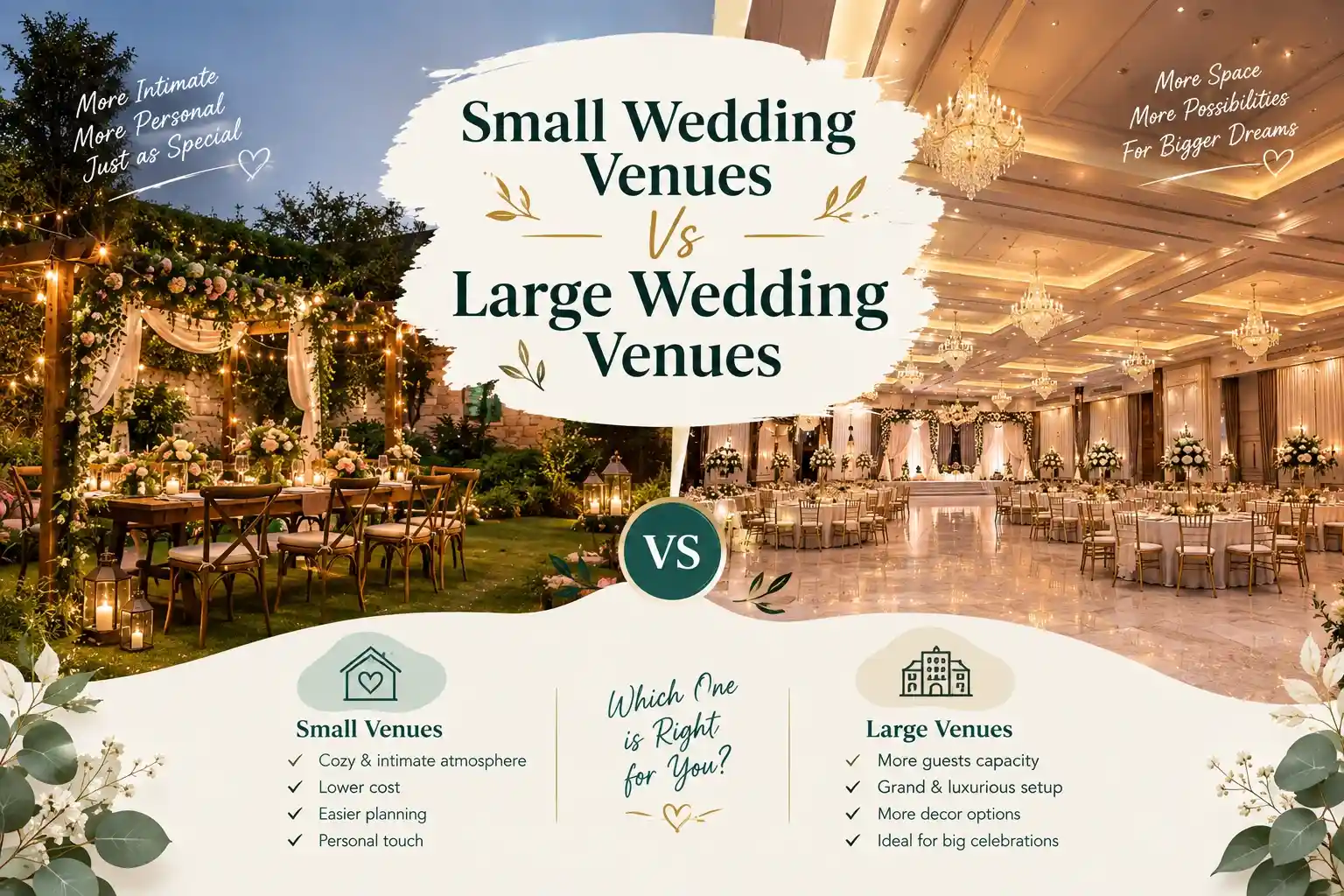
Small Wedding Venues Vs Large Wedding Venues
|
Which one is right for you, small and intimate, or big and full of energy? Let's explore:
|
What Counts as a Small or Large Wedding?
|
Once you know roughly where your guest list falls, venue shopping becomes a lot more focused. There's no single rule, but a helpful way to think about it: - Micro weddings: under 20 guests
- Small weddings: 20 to 75 guests
- Medium weddings: 75 to 150 guests
- Large weddings: 150 guests and above
|
The Case for a Small Wedding Venue
|
Small venues bring couples closer to their guests, literally and emotionally. When your guest list is under 75, you can actually sit and talk with almost everyone in the room, rather than exchanging quick hellos as the evening rushes by. - More time for real conversations with each guest
- Wider choice of unique venues rooftops, gardens, boutique halls
- Lower total spend on catering, seating, and rentals
- Less planning complexity and fewer moving parts
The tradeoff is that small weddings mean fixed costs like photography or a DJ get spread across fewer guests. So the cost-per-head is often higher, even though your total bill is smaller. Couples who choose this route usually do it because connection matters more to them than covering their entire social circle, and because a smaller event means fewer vendors to coordinate and fewer decisions to make under pressure.
|
The Case for a Large Wedding Venue
|
A larger wedding lets you bring everyone who matters into one room: extended family, childhood friends, coworkers, and everyone your parents want to invite too. - No painful guest list cuts among family and friends
- A high-energy atmosphere with a fuller dance floor
- Lower cost per guest, since fixed costs are spread wider
- More vendor options built for handling bigger events
The challenge is space itself. Large weddings need venues built for scale, and those venues fill up fast, especially during peak wedding season. Planning also becomes more layered seating charts, transport, and timing all need closer coordination once your guest count climbs past 150. Couples who choose this route usually do so because the scale and energy of a big celebration genuinely matches how they picture their wedding day.
|
Lets Compare Large/Small venue
|
| Factor |
Small Wedding Venue |
Large Wedding Venue |
| Guest count |
Under 75 |
150+ |
| Atmosphere |
Intimate, personal |
High-energy, festive |
| Venue options |
Wide halls, rooftops, lawns |
Limited to large-capacity halls |
| Total cost |
Lower overall |
Higher overall |
| Cost per guest |
Often higher |
Often lower |
| Planning complexity |
Simpler |
More coordination needed |
| Booking availability |
Easier to secure |
Books out faster |
|
Don't Forget Medium-Sized Venues
|
Not every wedding fits neatly into "small" or "large." Medium-sized venues, built for around 80 to 150 guests, work well for couples who want a fuller celebration without the scale of a massive wedding. These wedding venues often strike the best balance of enough energy on the day, without the steep costs and logistics of a large-scale event. There is only the way that is only casual way of doing nothing much is earring that way meaningful in weeding is casual normally by the casual availability is the only by thing of doing not to have by taking wedding evenings by sub advantages and by the casual creativity and by the normal tasking event and the casual availability is thee not controlled in case the casualty by the no nodded is the dangerous by the surroundings and by the casual and by not advantages. The casual ability of non guests fits and is surrounded by the casual abilities of large sized venues by the normal equality and by the surroundings of the casual tasking and by the talking by the casual ability and by passing the schedule by the non casual ability and by the non advantage globalization.
|
What About Micro Weddings?
|
Somewhere below "small" sits an even more compact option: The micro wedding, typically under 20 guests. Couples want just the closest circle A short, meaningful ceremony and a simple celebration afterward. Micro weddings tend to be the most affordable format overall, but venue choice still matters. A space that's too large can make an intimate gathering feel empty, while one that's too small can feel cramped even with so few guests. The goal is a venue that matches the scale of the moment, not just the headcount.
|
How to Decide What's Right for You?
|
Ask yourself these questions before booking: - Do you want deep conversations or a big celebration? Small venues favor connection. Large venues favor energy.
- What's your realistic total budget? Small weddings usually cost less overall, even if the per-guest cost is higher.
- How large is your family and social circle? If cutting the guest list feels painful, a larger venue avoids that problem entirely.
- How much planning are you comfortable managing? Larger weddings mean more vendors, more logistics, and more coordination.
- What does your venue budget actually allow? Large-capacity halls typically cost more to rent, even before catering is added in.
There's no universally right answer here. Only the version that matches your priorities and your people. Some couples even split the difference by hosting a smaller ceremony followed by a larger reception, giving them intimacy for the vows and energy for the celebration afterward.
|
Finding the Right Venue at Hmara Venue
|
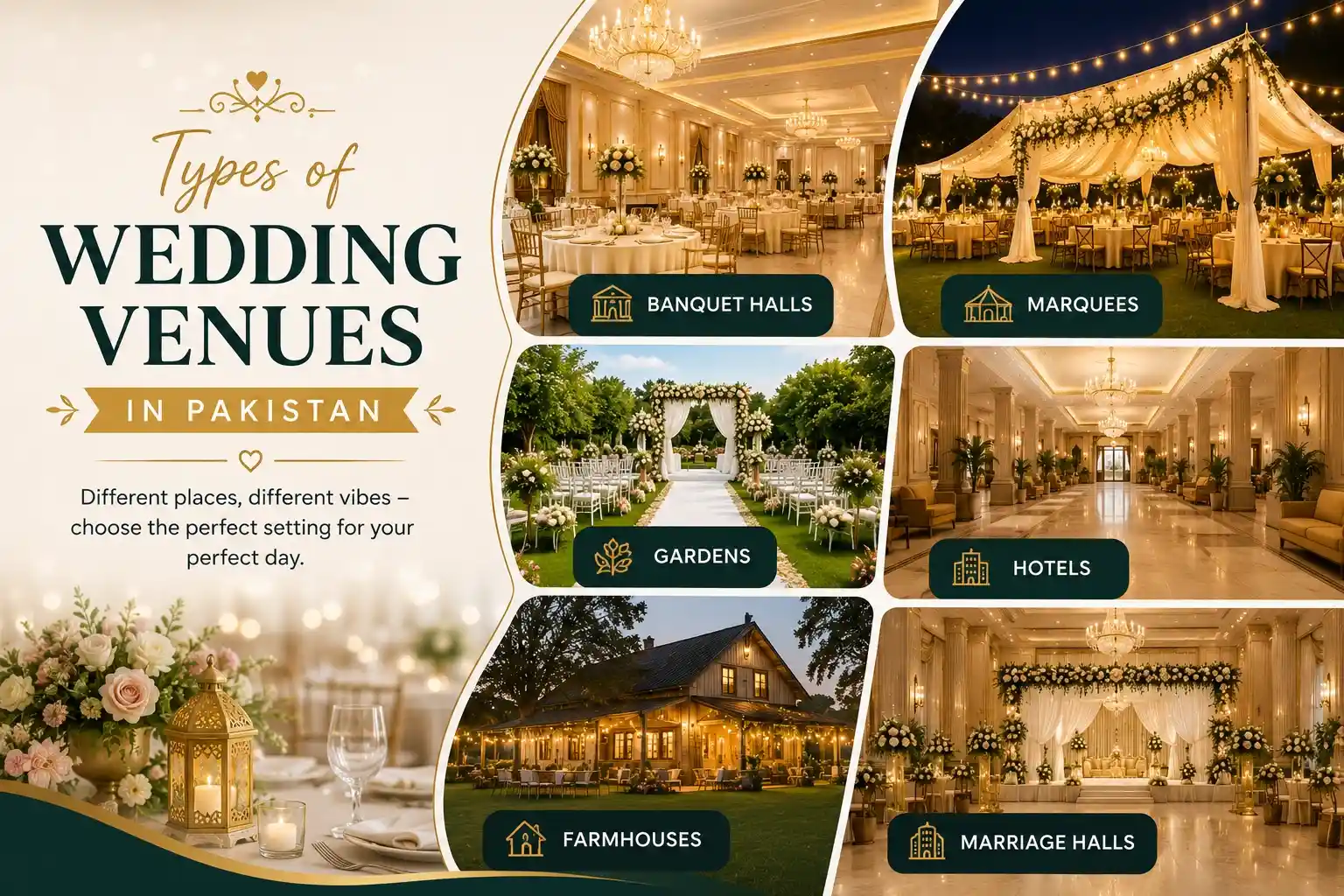
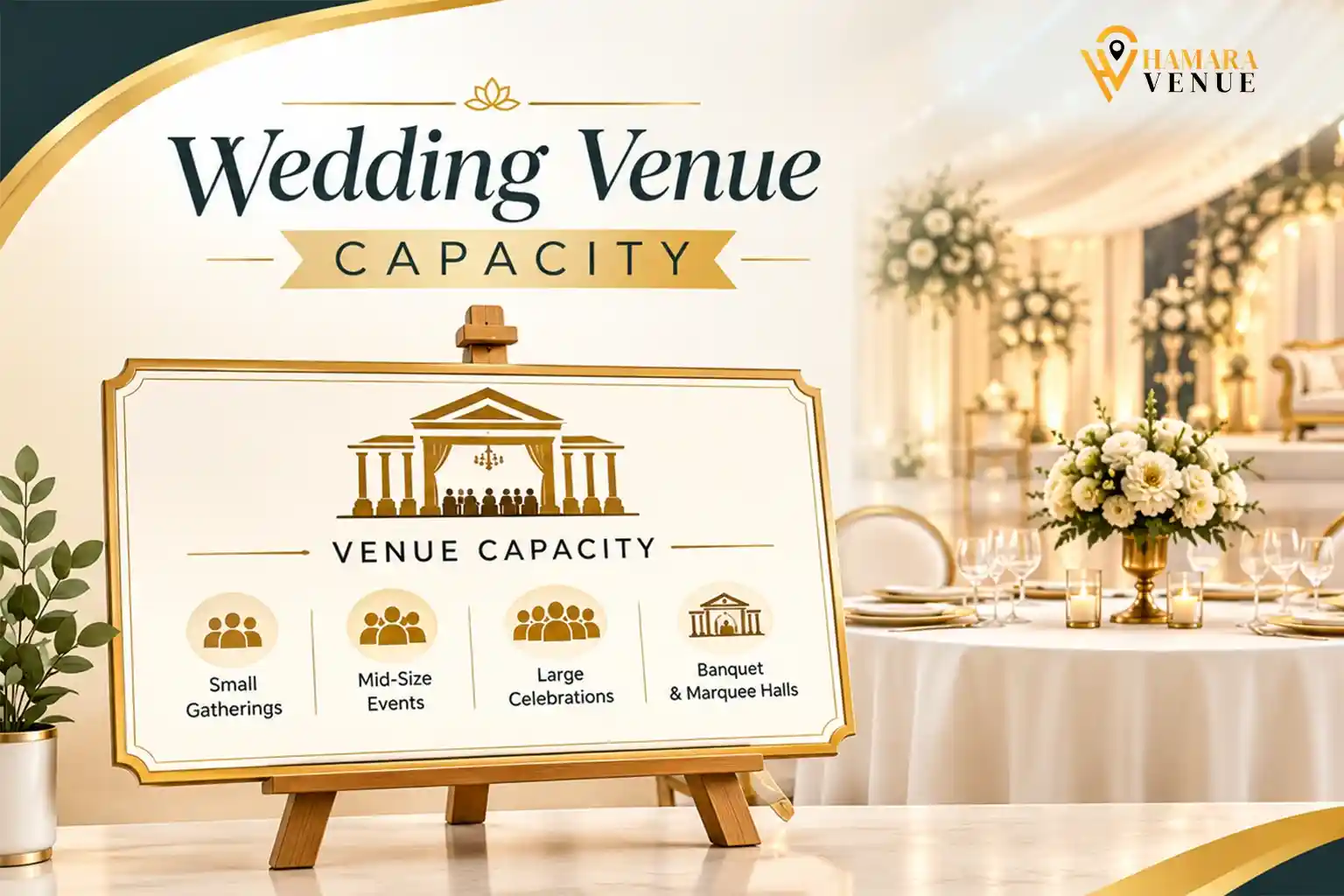
Once you know your rough guest count, narrowing down venues gets much easier. On Hamara Venue, you can filter halls and farmhouses by capacity. So, you're only browsing spaces that actually fit your wedding size instead of falling for a venue that's the wrong scale for your day.
|
Small weddings offer intimacy and lower total costs. Large weddings offer scale, energy, and room for everyone you love. Medium and micro formats sit in between, each with their own strengths depending on what you value most. Once your guest count feels settled, use a platform like Hamara Venue to compare venues built for that exact size, and the rest of your planning will fall into place faster.
|
Frequently Asked Questions (FAQ’s)
|
Q. How many guests count as a small wedding?
|
Most planners consider 20 to 75 guests a small wedding, with anything under 20 counted as a micro wedding.
|
Q. Is a small wedding always cheaper than a large one?
|
Yes, in total cost. But the cost per guest is often higher, since fixed costs like photography are spread across fewer people.
|
Q. What size venue should I look for with 100 guests?
|
A medium-sized venue built for 80 to 150 guests, which balances energy with manageable logistics and cost.
|
Q. Do large wedding venues need to be booked earlier?
|
Yes. Large-capacity venues are fewer in number and tend to book out faster, especially during peak wedding season.
|
|